Born in Banga, Punjab
Joined Revolutionary Activities
Protest against Simon Commission
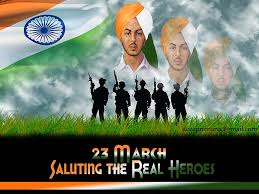
Martyrdom at age 23
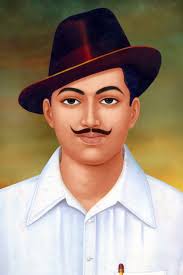
Bhagat Singh was born on 27 September 1907 into a Punjabi Jat Sikh family in the village of Banga, located in the Lyallpur district of Punjab (now in Pakistan). He was the second of seven children—four sons and three daughters— born to Vidyavati and Kishan Singh Sandhu. Revolutionary ideas surrounded Bhagat Singh from an early age. His father, Kishan Singh, and his uncle, Ajit Singh, were active participants in progressive political movements, including the agitation against the Canal Colonization Bill in 1907 and later the Ghadar Movement of 1914–1915. Growing up in an environment charged with nationalism and resistance to British rule deeply influenced Bhagat Singh’s ideology and commitment to India’s freedom. After being sent to the village school in Banga for a few years, Bhagat Singh was enrolled in the Dayanand Anglo-Vedic School in Lahore. In 1923, he joined the National College in Lahore, founded two years earlier by Lala Lajpat Rai in response to Mahatma Gandhi's non-cooperation movement, which urged Indian students to shun schools and colleges subsidized by the British Indian government. Police became concerned with Singh's influence on the youth and arrested him in May 1927 on the pretext that he had been involved in a bombing that had taken place in Lahore in October 1926. He was released on a surety of Rs. 60,000 five weeks after his arrest. He wrote for, and edited, Urdu and Punjabi newspapers, published in Amritsar[20] and also contributed to low- priced pamphlets published by the Naujawan Bharat Sabha that excoriated the British. He also wrote for Kirti, the journal of the Kirti Kisan Party ("Workers and Peasants Party") and briefly for the Veer Arjun newspaper, published in Delhi. He often used pseudonyms, including names such as Balwant, Ranjit and Vidhrohi.
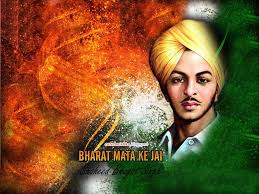
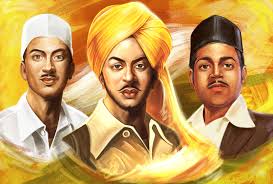
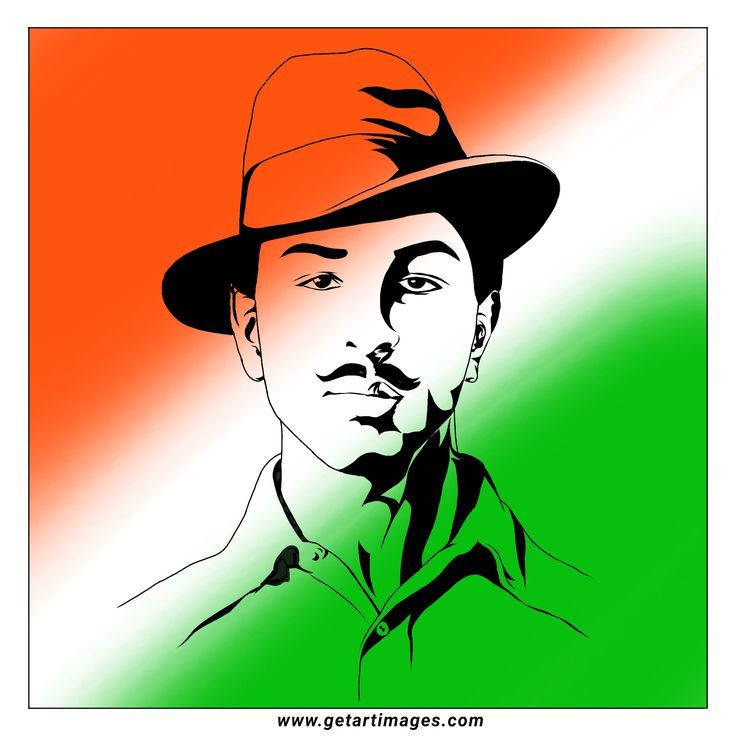
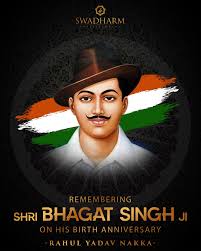
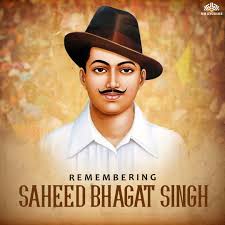
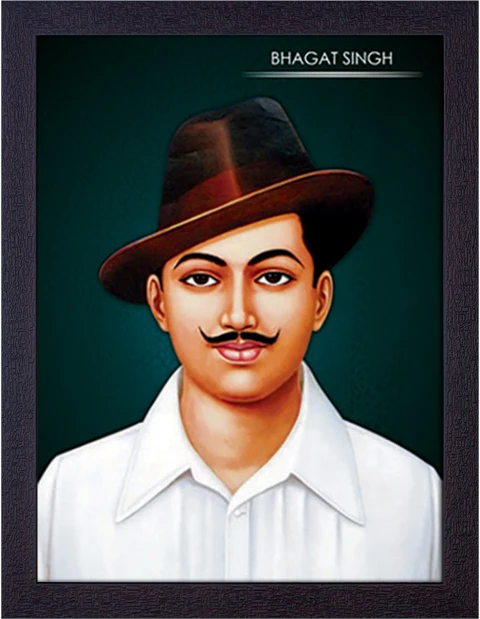
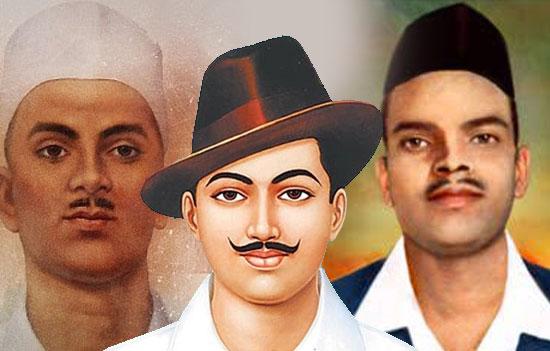
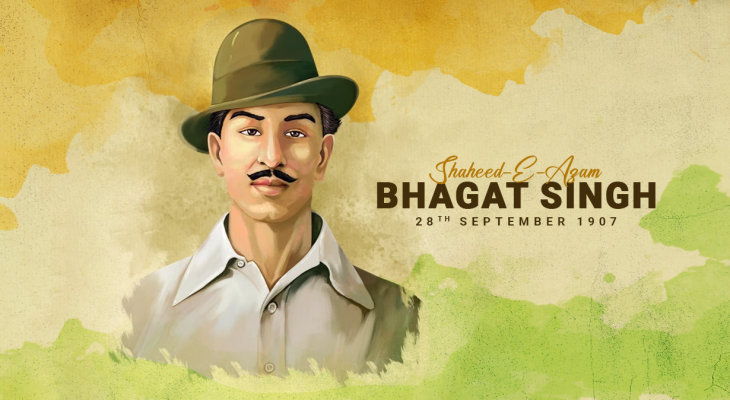
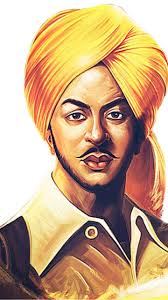
Bhagat Singh (27 September 1907 – 23 March 1931) was an Indian anti-colonial revolutionary who became one of the most influential figures in the Indian independence movement. He participated in the assassination of a British police officer in December 1928, an act intended as retaliation for the death of Indian nationalist Lala Lajpat Rai. In 1929, Bhagat Singh and Batukeshwar Dutt carried out a largely symbolic bombing of the Central Legislative Assembly in Delhi to protest repressive colonial laws. They deliberately courted arrest to use the trial as a platform to spread revolutionary ideas. His prolonged hunger strike in prison, supported by extensive coverage in Indian newspapers, transformed him into a household name—especially in the Punjab. Executed at the age of 23, Bhagat Singh became a martyr and a folk hero across northern India. Inspired by Bolshevism and anarchism, his ideas challenged both British rule and the Indian National Congress to reflect deeply on the direction of the freedom struggle. In December 1928, Bhagat Singh and an associate, Shivaram Rajguru, both members of a small revolutionary group, the Hindustan Socialist Republican Association (also Army, or HSRA), shot dead a 21-year-old British police officer, John P.0 Saunders, in Lahore, Punjab, in what is today Pakistan, mistaking Saunders, who was still on probation, for the British senior police superintendent, James Scott, whom they had intended to assassinate. They held Scott responsible for the death of a popular Indian nationalist leader Lala Lajpat Rai for having ordered a lathi (baton) charge in which Rai was injured and two weeks thereafter died of a heart attack. As Saunders exited a police station on a motorcycle, he was felled by a single bullet fired from across the street by Rajguru, a marksman. As he lay injured, he was shot at close range several times by Singh, the postmortem report showing eight bullet wounds.Another associate of Singh, Chandra Shekhar Azad, shot dead an Indian police head constable, Channan Singh, who attempted to give chase as Singh and Rajguru fled.
If you have questions, feedback, or suggestions about this project, feel free to reach out.
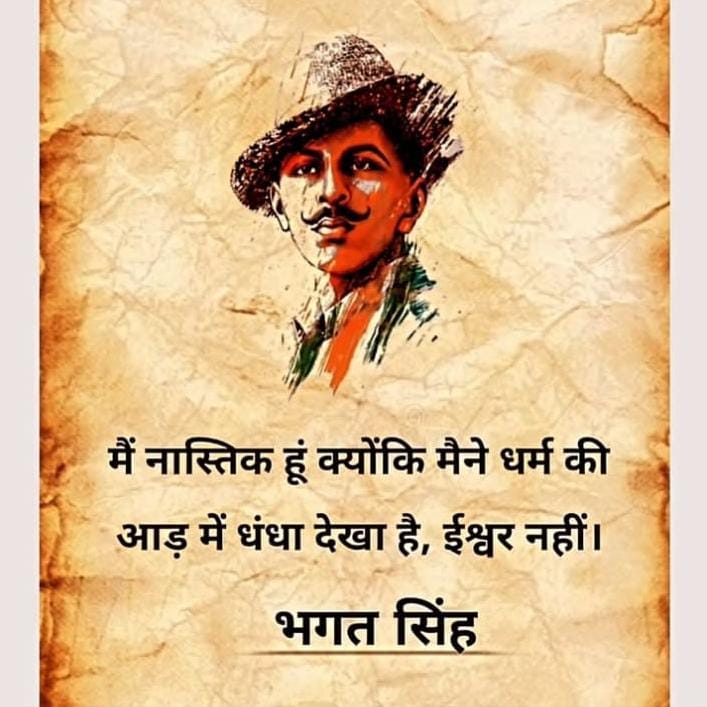
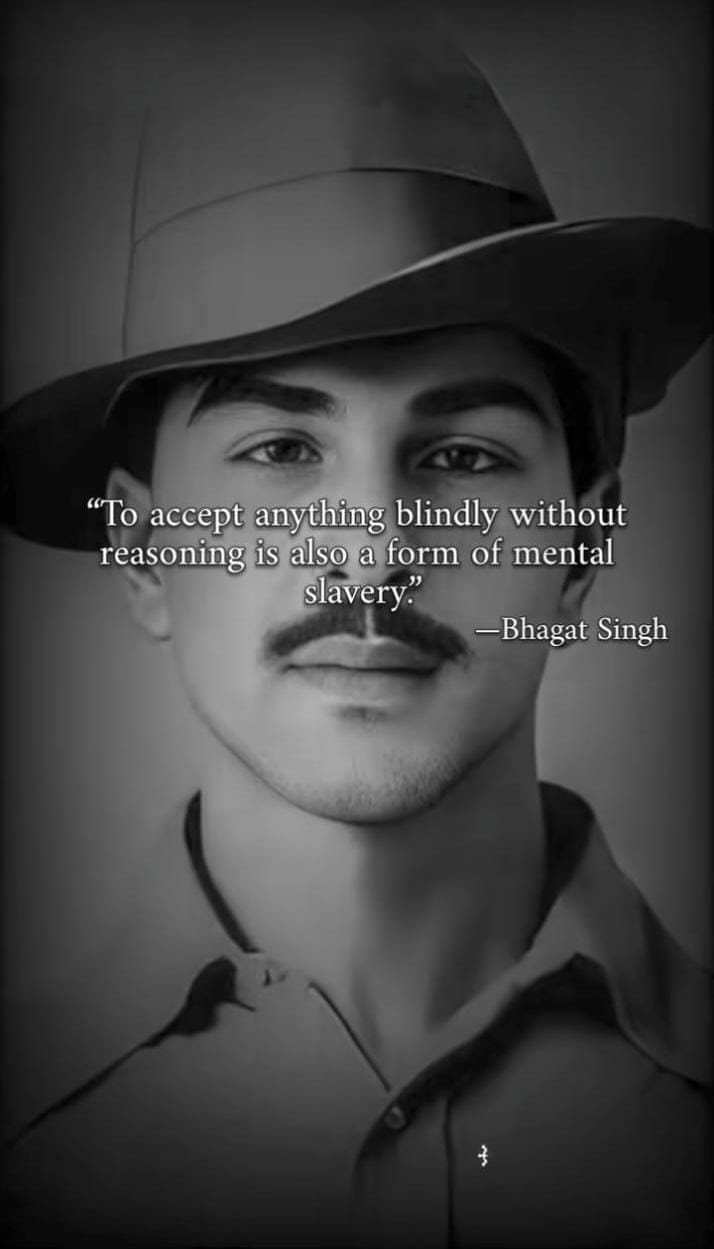
Revolutionary philosophical essay.
Thoughts written during imprisonment.
Letters reflecting ideology & sacrifice.